
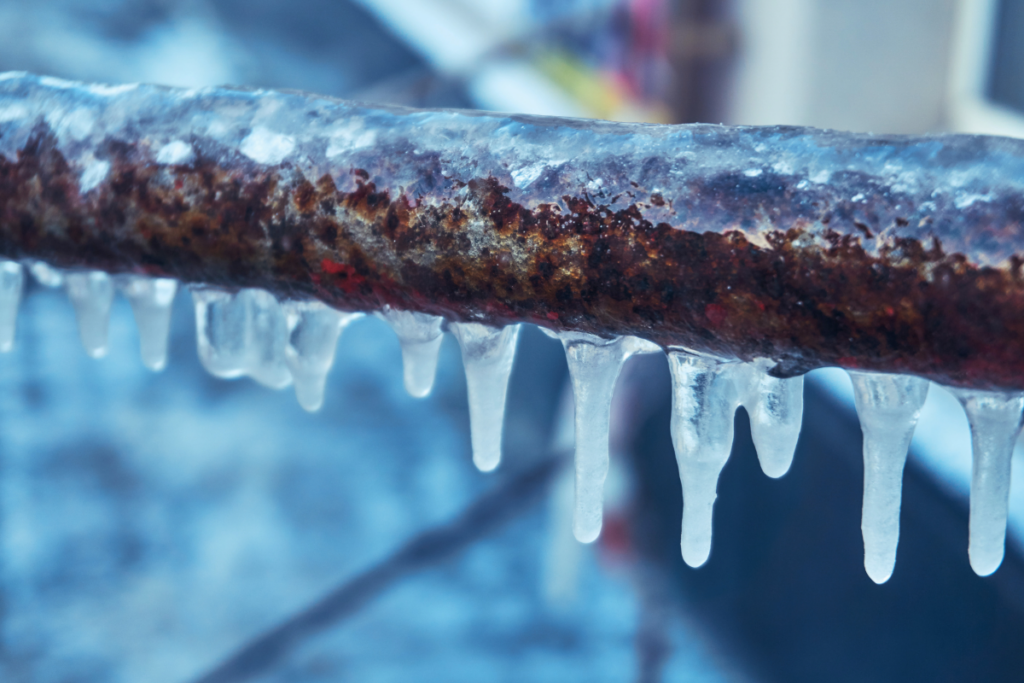
It’s 15 degrees outside, the wind chill makes it feel like zero, and somewhere in your walls, your pipes are about to stage a revolt…
January in Northwest Ohio doesn’t mess around. When temperatures drop into the single digits and stay there for days, frozen pipes become a real threat – and if a pipe freezes and bursts, you’re looking at thousands of dollars in water damage, not to mention the nightmare of dealing with repairs in the middle of winter.
Here at Tin Man, we’ve seen the aftermath of burst pipes too many times. Water flooding basements, ruined drywall, damaged floors – all because pipes couldn’t handle the extreme cold.
The good news? Most frozen pipe disasters are completely preventable if you know what to do before the deep freeze hits.
Why Pipes Freeze (And Why It Matters)
Water expands when it freezes – that’s basic science. But when that water is trapped inside your pipes, it has nowhere to go. The pressure builds up until something has to give, and that something is usually your pipe. Even a tiny crack can spray hundreds of gallons of water into your home once it thaws.
The pipes most at risk are the ones in unheated areas – crawl spaces, attics, garages, and exterior walls. If you’ve got pipes running through any of these spots in your Bowling Green home, pay attention.
Keep the Heat Flowing
The simplest way to prevent frozen pipes is to keep warm air circulating throughout your house, even in areas you don’t normally heat.
Don’t crank down your thermostat too low when you’re away. We know it’s tempting to save money on heating bills, but keeping your home at least 55 degrees is worth it to avoid a burst pipe. If you’re leaving town during a cold snap, set your thermostat to 60 degrees minimum and ask a neighbor to check on your house.
Open cabinet doors under sinks, especially if those sinks are on exterior walls. Letting warm air from your house reach the pipes makes a big difference. It looks a little weird, but it works.
Insulate Vulnerable Spots
Pipe insulation is cheap and easy to install – way cheaper than fixing a burst pipe. You can grab foam pipe sleeves at any hardware store and wrap them around exposed pipes in crawl spaces, basements, attics, and garages.
Pay special attention to pipes near exterior walls or in unheated areas. Even wrapping pipes with old towels or newspaper in a pinch is better than nothing when a hard freeze is coming.
If you’ve got gaps or cracks where cold air can get in near your pipes – around dryer vents, under doors to crawl spaces, or where pipes enter your home – seal them up. A little weatherstripping or spray foam goes a long way.
Let Faucets Drip
When temperatures are forecast to drop into the single digits or below zero, let your faucets drip slightly – especially ones on exterior walls. Moving water is much harder to freeze than standing water. You don’t need a steady stream, just a slow drip. Yes, it wastes a tiny bit of water, but it’s nothing compared to the water damage from a burst pipe.
Disconnect Outdoor Hoses and Shut Off Outdoor Faucets
If you haven’t done this yet, do it now. Detach garden hoses from outdoor spigots and drain them. Then shut off the water supply to outdoor faucets from inside your house if you have shut-off valves (most homes do). Drain the remaining water from the outdoor faucet by opening it briefly. Any water left in there can freeze and crack the pipe or the spigot itself.
Know the Warning Signs
If you turn on a faucet and only a trickle comes out, you might already have a frozen pipe. Don’t ignore it – a fully frozen pipe can burst. If you catch it early, you might be able to thaw it safely by opening the faucet and applying gentle heat (a hair dryer, never a torch) to the pipe. But if you’re not sure where the freeze is or how to handle it safely, call us right away.
Other warning signs include strange smells coming from drains (frozen pipes can cause sewage backup), visible frost on exposed pipes, or hearing banging sounds when you turn on water.
What to Do If a Pipe Bursts
First, shut off your main water supply immediately – every second counts when water is gushing into your home. Then call Tin Man for emergency plumbing service. We offer 24/7 emergency service because we know disasters don’t wait for business hours.
Move anything you can away from the water, and if it’s safe to do so, try to contain the flooding with towels and buckets until we arrive.
Stay Ahead of the Freeze
Northwest Ohio winters can be brutal, but your plumbing doesn’t have to suffer. A little prevention now saves you from a major headache (and a huge repair bill) later.
At Tin Man Heating and Cooling, we’ve been protecting homes in Bowling Green and the Greater Toledo area from winter’s worst since 1988. Our licensed plumbers know exactly what Ohio homeowners are up against when the temperatures drop, and we’re here to help you stay one step ahead.
Worried about your pipes during the next cold snap? Give us a call at 419.827.5799 or schedule a plumbing check online. Let’s make sure your home is ready for whatever winter throws at us – because the only thing that should be frozen this January is the pond at the park, not your pipes.